Gemma 4 vs Llama 3.3 for enterprise 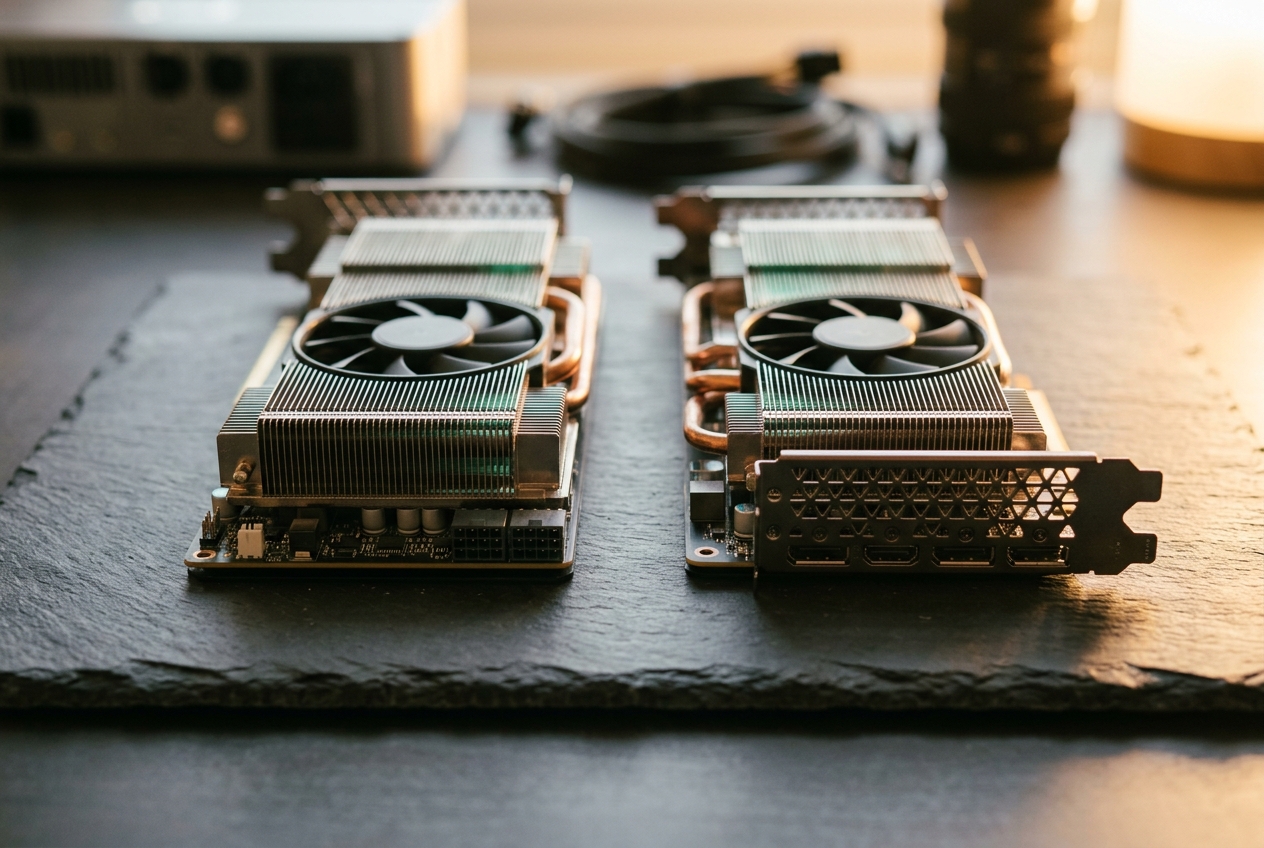
Gemma 4 vs Llama 3.3 for Enterprise RAG: Decide in 2026
How AI engineering leads at regulated EU enterprises pick between Gemma 4 and Llama 3.3 for production RAG — license, GPU bill, eval rubric.
How AI engineering leads at regulated EU enterprises pick between Gemma 4 and Llama 3.3 for production RAG — license, GPU bill, eval rubric.
AI engineering leads at regulated EU enterprises pick Gemma 4 over Llama 3.3 for production RAG when Apache 2.0 licensing, EU-language grounding fidelity at the 27B sweet spot, and single-H100 inference economics matter more than raw 70B reasoning headroom.
The vendor pitch frames this as a benchmark race (MMLU, ARC, HumanEval) — but for regulated RAG, the deciding axes are license auditability, citation faithfulness under imperfect retrieval, and refusal behavior on out-of-context chunks. Llama 3.3 wins the leaderboards and loses the procurement review, because the Llama Community License's acceptable-use clauses and 700M MAU trigger force a legal escalation that Apache 2.0 simply does not.
If you lead AI engineering at a bank, insurer, hospital, TSO, or defence subcontractor in the EU, the Gemma 4 vs Llama 3.3 for enterprise decision is not a benchmark race. It is a procurement memo with three columns: license auditability, EU-language grounding fidelity under imperfect retrieval, and inference economics on the GPU envelope your CFO actually signed off on. Llama 3.3 wins the leaderboards. Gemma 4 wins more production RAG reviews — and the reasons sit outside MMLU.
This page is the comparison the vendor decks skip. It maps Llama 3.3's 70B parameters, 128K context, and 142 GB FP16 VRAM footprint [1][3] against Gemma 4's small-to-27B family lineage and edge-friendly variants [5][6][7], then translates both into a defensible decision your legal, finance, and MLOps teams can co-sign before the EU AI Act high-risk obligations land in August 2026.
Gemma 4 inherits the Gemma license, not Apache 2.0, so it still needs legal review [8] — but its terms do not contain a competitor-MAU trigger like Llama's [4], which is the specific clause that blocks B2B SaaS redistribution and adds 6-12 weeks to procurement.
Wavenetic deploys Gemma 4 inside WaveOps with a citation-or-refuse system prompt, chunk-level provenance logging, and a refusal-rate KPI that maps directly to EU AI Act Article 15 accuracy and robustness evidence.
Use a RAG-specific eval rubric: grounding score, citation faithfulness, refusal rate on out-of-context chunks, and long-context recall past 16k tokens — Gemma 4's 128K context inherited from the Gemma 3 family [7] holds up under this rubric when paired with a reranker.
Gemma 4 at the 27B class fits on a single H100 80GB with room for the embedding model and reranker on the same node; Llama 3.3 70B in FP16 needs ~142 GB VRAM, i.e. two H100s before you even price the rest of the stack [3].
WaveNode appliances ship with prompt/response logging, model-version pinning, rollback, and PII redaction wired in by default, so the model swap (Gemma 4 vs Llama 3.3) is a config change, not a re-architecture.
After reading, the engineering lead can decide which model goes into their production RAG pipeline this quarter — with a defensible license memo for legal, a sized GPU bill of materials for finance, and a RAG-specific eval rubric (grounding, citation, refusal, long-context recall) they can hand to their MLOps team.