Blog
Technical insights, product updates, and perspectives on enterprise AI.

Kimi K2 for European CIOs: the 4-path deployment rule
Kimi K2 is not a vLLM problem. It's a sovereignty, MoE-reliability, and license-review problem — and here's the framework no vendor guide gives you.

EU AI Act August 2026: the deployer's GPAI dossier
August 2, 2026 is when EU regulators gain enforcement powers over GPAI — and when downstream banks, insurers, and hospitals get the first knock, not the model vendors.

Kimi K2 enterprise RAG: control plane, not shortcut
Kimi K2's 256K context and 200-step tool stamina reshape enterprise RAG — but only if you treat them as a retrieval control plane, not prompt-stuffing.

On-prem vs cloud AI: 7 workload tests that decide it
The on-premise AI vs cloud AI question isn't philosophical. Seven workload tests produce a deterministic placement verdict — no hybrid handwave required.

Kimi K2 vs GPT-5: the EU enterprise deployment call
Workload-classification rubric, GPU break-even math, and the CISO provenance checklist for choosing between self-hosted Kimi K2 and GPT-5 in EU regulated industries.

Open-source AI in regulated EU: 4 diligence vectors
Why the AI Act's open-source carve-out collapses the moment a regulated buyer fine-tunes — and the four-vector diligence pass that replaces it.

Enterprise AI RFP Requirements for 2026: The Evidence-First Scorecard
Question lists let vendors win on prose. Here is the weighted scorecard, evidence rules, and POC protocol your 2026 enterprise AI RFP actually needs.

The AI-Native Enterprise Operating System: 5 Layers for Escaping Pilot Purgatory
AI-native transformation is an engineering program with five hard layers, not a culture exercise. Here is the architecture CIOs need to escape pilot purgatory.
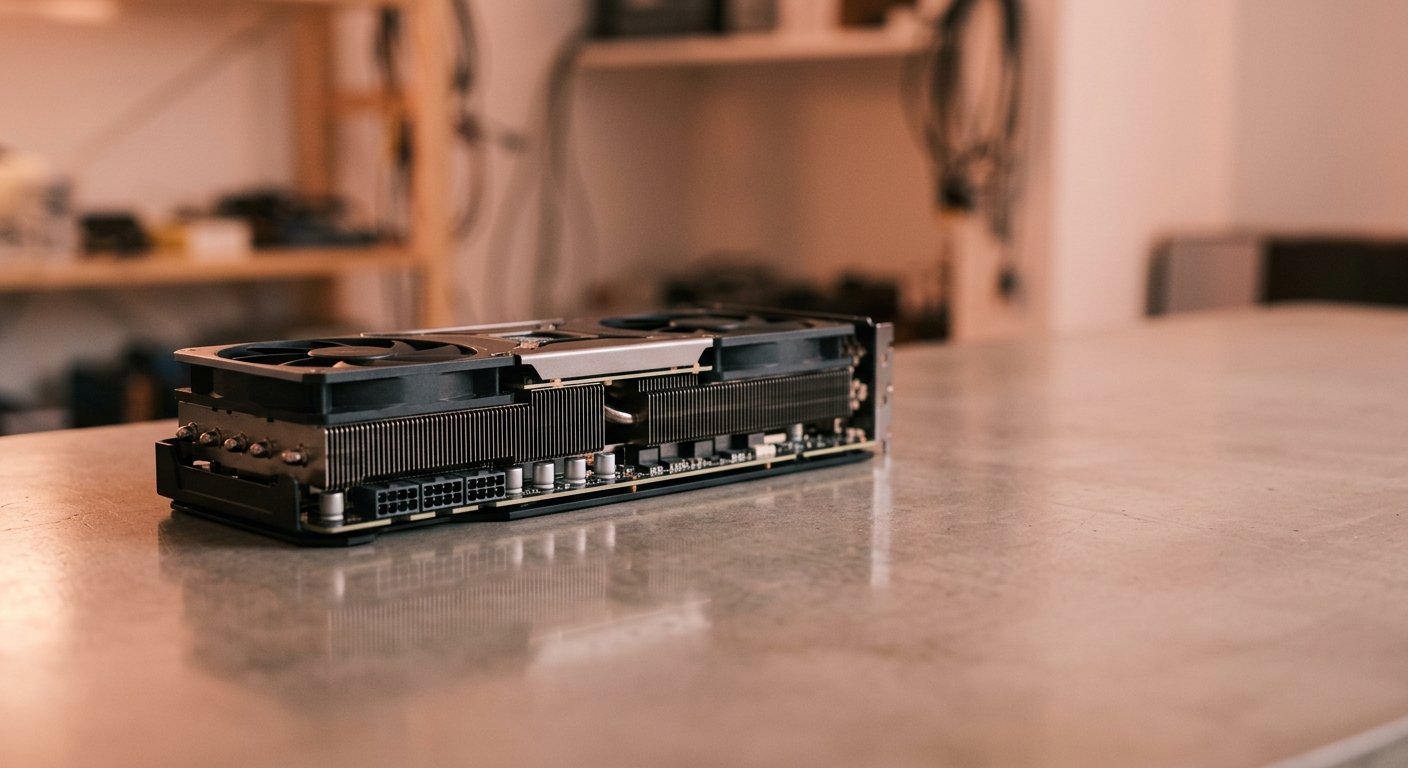
Local GPU Inference Economics: The Break-Even Is Utilization, Not Hardware Price
Local GPU inference economics are decided by sustained utilization and workload shape — not GPU sticker price. Here's the threshold, the VRAM math, and the routing rule.

Azure AI Foundry vs On-Prem AI: A Workload Placement Guide, Not a Vendor Shootout
The Foundry-versus-on-prem debate is the wrong question. The right one is which AI workloads belong in cloud, Foundry Local, or sovereign on-prem — and how to architect the seam.
Gemma 4 in 2026: the May update rewrote on-prem math
Gemma 4's April launch was a spec sheet. The May multi-token prediction update is what made on-prem inference production-viable for EU CTOs in 2026.

Local LLM Inference Requirements: Size the Workload Before You Buy the GPU
Enterprise local LLM inference is a concurrency and SLO engineering problem, not a GPU shopping problem. Here's the workload-sizing sequence that drives every downstream decision.

The CFO's Business Case for On-Prem AI: A Portfolio Model That Survives Finance Review
On-prem AI only pencils out when you model it as a workload portfolio with honest depreciation, utilization, and headcount — not a single break-even chart.

How to Choose an Enterprise AI Vendor When Sensitive Data Is in Scope
A procurement framework for choosing an enterprise AI vendor when sensitive data is in scope — architecture over certifications, topology over contracts.

The No-Hype Enterprise Shortlist: Best Open-Weight LLMs by RAG Workload
There is no single best open-weight LLM for enterprise RAG. There are four defensible shortlists, matched to four workload archetypes — and a license filter that disqualifies most of them.

Sovereign AI vs SaaS: The Nine-Layer Audit That Replaces the Binary
Sovereignty isn't a deployment choice — it's a nine-layer audit. Here's the buyer's guide that replaces the SaaS-vs-on-prem binary with a real decision rule.

The Enterprise AI Software Factory: Eight Control Points Or It Doesn't Survive Its First Audit
An enterprise AI software factory is not a platform you buy or a velocity metric you chase. It is a governance-first operating model measured in auditable control points per merged change.

Closed-Loop AI Operations: The Control Architecture Nobody Is Shipping
Closed-loop AI succeeds or fails on governance, action-layer wiring, and rollback — not model accuracy. Here is the six-stage architecture and the maturity ladder.

From Public Demo to Air-Gapped Deployment: Building Slovenia's AI CCO
Slovenia's first public AI CCO for accounting, tax, and compliance is live in WaveFlow as a free public demo — with private cloud, on-premise, and air-gapped deployments available for regulated entities.
Cloud vs Local AI Agents Is the Wrong Question. Build the Routing Layer.
Stop framing AI agents as a cloud-or-local procurement choice. Build a policy-based routing layer that decides per-task where reasoning, memory, tools, and data execute.

Air-Gapped AI vs. Private AI vs. Confidential AI: What Enterprises Actually Need
Most enterprises asking for air-gapped AI need one of four distinct architectures. Picking the wrong one means paying air-gap prices for cloud-grade risk.

On-Premise AI Cost: A CFO-Ready TCO Breakdown, Not Just a GPU Price
A line-item TCO model for on-premise AI: CapEx, OpEx, facility readiness, refresh cycles, and the utilization math that actually drives cost per token.

Cloud vs On-Prem AI is not binary: route by workload
Why CIOs burn cloud budget on stable workloads — and the 6-workload taxonomy (training, RAG, real-time, regulated docs) that fixes the routing problem.
Enterprise AI Agent Architecture: Build the Control Plane Before the Agent
Enterprise AI agents fail in production because teams build them as standalone apps instead of governed digital workers on a shared control plane. Here's the sequencing that actually ships.

Private RAG Architecture: A Security-Boundary-First Reference Design
A reference architecture for private RAG built around security boundaries: ingestion zones, vector stores, policy engines, inference, and audit planes.

On-Premise AI for Enterprises: A Workload-by-Workload Decision Framework
A practical framework for classifying enterprise AI workloads by sensitivity, latency, and compliance—then deciding what runs on-prem, hybrid, or in the cloud.

Why CFOs run Gemma 4 (not GPT-4) for AI accounting
Local Gemma 4 cuts VAT-compliance time from 8 hours to 30 minutes — and keeps invoices off US cloud APIs. The 90-day production benchmark Slovenian SMBs ship.
Why regulated EU enterprises run Gemma 4 over Llama 3
Gemma 4's licence terms, 27B-parameter sweet spot, and EU-data RAG accuracy beat Llama 3.3 for regulated enterprise — the 90-day deployment benchmarks.
Why on-premise AI is the only option for regulated industries
Cloud AI introduces risks that regulated organisations cannot accept. Here is why local inference is not a compromise, it is an advantage.