Cloud vs Local AI Agents Is the Wrong Question. Build the Routing Layer.
Stop framing AI agents as a cloud-or-local procurement choice. Build a policy-based routing layer that decides per-task where reasoning, memory, tools, and data execute.
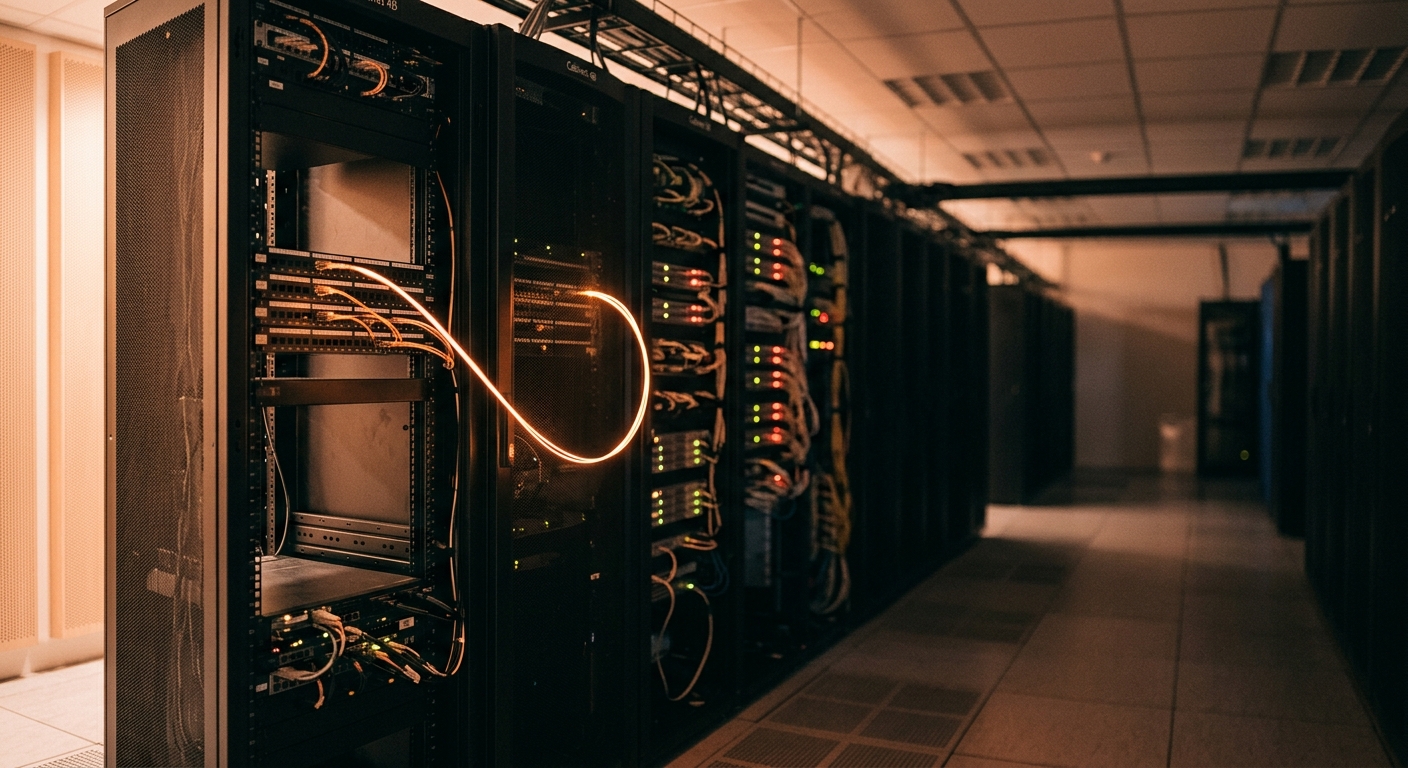
The cloud-versus-local AI agent debate is the wrong frame. The right frame is a policy-based routing layer that decides, per task, where reasoning, memory, tools, and data each execute — and treats that routing as production infrastructure, not a deployment preference.
Every 'hybrid' recommendation in circulation right now is hand-waving. Without a task classifier, a fallback chain, an evaluation harness, and explicit governance for tool scopes and approval gates, hybrid is just two silos with a slogan painted across them. What follows is the architecture an enterprise team can take to an architecture review on Monday: classification rules, fallback behavior, cost and latency thresholds, and the security boundaries that make the whole thing defensible.
Agents Break the Cloud Cost Curve Earlier Than Vendors Admit
A chat completion is one round trip. An agent is a loop: plan, call a tool, observe, replan, retry, summarize, escalate. That loop multiplies token usage by an order of magnitude or more for the same user-visible task, and the multiplier compounds when retrieval, function calling, and self-critique are layered on top. Cloud pricing that looks reasonable for chat completions becomes punitive at agent volume, and the local-versus-cloud crossover point shifts much earlier in the workload curve than vendors will tell you.
The latency math gets worse on the same axis. Local inference latency sits in the 10–50ms range against 100–500ms+ for cloud APIs [6]. A single chat call absorbs that overhead invisibly. An agent that makes twelve model calls in a single user turn pays it twelve times, and every retry pays it again. The cost curve is not a slow climb — it's a step function that triggers the moment a planner sits in front of the model.
Frame the economics around token amplification, not per-call pricing. Storage compounds the same way: a 4TB NVMe drive runs around $200, while cloud storage typically costs 30–50% more per gigabyte even though it cuts DevOps overhead by roughly 70% [3]. Those tradeoffs only resolve in favor of one tier when measured at agent volume, not at chat volume.
Route on Four Axes, Not One
The decision is not 'where does the model live.' It is a per-task routing on four independent axes: data sensitivity, latency budget, capability ceiling, and reliability requirements. Each axis has a different threshold, and the thresholds do not move together. A task can be sensitive but latency-tolerant, or capability-bound but air-gapped, or low-sensitivity but reliability-critical. Collapsing these into a single 'cloud or local' verdict produces the bad architectures littering production today.
The four-axis decomposition is the right structure [5], but treating it as a scoring rubric that produces one answer for the whole agent is the mistake. It produces four answers — one per subtask — and a routing layer is what reconciles them.
An agent has four architectural layers — reasoning core, memory, tools and connectors, and policies and guardrails [1] — and each layer routes independently. Reasoning for a regulated extraction task runs on a local open-weight model while memory persists in an encrypted on-prem vector store. A separate planner step that requires frontier capability routes to a managed tier. The tool that writes back to the system of record stays inside the perimeter regardless. The router enforces the policy. The model location is an output of the policy, not an input.
Privacy Risk and Security Risk Are Not the Same Problem
Most posts on this topic conflate privacy and security and give advice that fails on both. They are governed by different mechanisms. Privacy risk — residency, training exposure, third-party data sharing — is governed by where data flows. Security risk — prompt injection, plugin supply chain compromise, credential theft, filesystem blast radius — is governed by what an agent is permitted to do once it has the data. A routing layer enforces both, independently, through different controls.
The agent-permission side is where the field is weakest. Researchers have found hundreds of exposed agent instances with zero protection, 341 malicious plugins, and prompt-injection attacks designed to drain cryptocurrency wallets [2]. None of those failure modes are fixed by choosing local over cloud. They are fixed by tool scopes that limit which functions an agent can call, sandboxes that isolate execution, secret handling that keeps credentials out of model context, approval gates that require human confirmation for destructive actions, and audit logs that record every tool invocation with the data it touched.
Privacy controls live one layer up. Routing on data sensitivity means tagging documents and fields at ingest, binding tags to policy, and refusing to forward tagged content across a tier boundary regardless of which model the planner wanted to call. That is not the same control as sandboxing the tool runtime, and a system that implements one without the other is half-built. The routing layer is the only place where both controls compose cleanly, because it sits between the planner and every external effect.
Reliability Means Something Different for a Long-Running Agent
A chat call that fails returns an error to a human who retries. An agent loop that fails mid-execution corrupts state, leaves tools half-invoked, and burns budget on retries that may never converge. Cloud APIs rate-limit mid-loop. They deprecate models on quarterly cycles. They change tool-calling schemas without warning. Those failure modes are invisible at chat scale and catastrophic at agent scale.
Local inference belongs on the critical path even when cloud is the preferred capability tier. Not because local is always better — frontier reasoning still lives in cloud-scale models — but because a routing layer without a local fallback has no answer when the upstream provider rate-limits a production loop or sunsets the model the agent was built around. The fallback chain has to be explicit: primary tier, degraded tier, local tier, with defined behavior at each step including which capabilities are sacrificed and which tasks are deferred.
Cloud storage handles multi-agent concurrency natively through locking, versioning, and concurrent reads, while local storage reads on the same machine are measured in microseconds [3]. A serious routing layer uses both: hot RAG and short-term memory served locally for latency, durable system-of-record state held wherever concurrency and residency policy require. Reliability is a property of the routing decisions, not of either tier in isolation.
The Reference Architecture
A working routing layer has five components, and a system missing any of them is not hybrid — it is two silos with a wrapper. First, a task classifier that inspects the incoming request, the data tags attached to it, and the planned tool calls, and emits a routing decision per subtask. Second, a policy engine that binds data tags to allowed tiers and refuses to compose a plan that would violate a binding. Third, a fallback chain with explicit degradation rules: which tier handles which subtask under nominal conditions, what happens when the primary tier returns rate-limit or schema errors, and which subtasks are refused when no compliant tier is available.
Fourth, an evaluation harness that runs the routing decisions themselves against golden traces — not just model outputs, but the full sequence of which tier handled which step, with assertions on policy compliance, latency budgets, and cost ceilings. Routing decisions regress the same way prompts and models regress, and they need the same test discipline. Fifth, a citation-grade audit log that records every step of every loop: which classifier verdict was reached, which tier executed, which documents were retrieved, which tools fired, and what the policy engine allowed or blocked. The agent reasons across reasoning, memory, tools, and policies [1]; the audit log has to span all four.
The output of this architecture is not a deployment diagram. It is a per-task contract. Sensitive document extraction routes to a local open-weight model with on-prem retrieval and a tool scope that permits read-only access to a tagged corpus. A frontier reasoning step on already-redacted summaries routes to a managed tier with a strict token budget. A write-back to the ERP routes through an approval gate regardless of which model proposed it. The routing layer that enforces all of them consistently is the asset.
Managed Private Deployments Are a Third Lane, Not a Substitute
Managed private cloud is a legitimate third lane. Regulated teams that need frontier capability and stronger residency controls than public APIs offer have a real use case for it, and a routing layer should treat it as a first-class tier alongside public cloud and on-premise. Pretending it does not exist forces teams into worse compromises.
It is not a substitute for on-premise execution, and the cases where the substitution fails are predictable. Air-gapped environments cannot route to a managed tier by definition. High-volume repetitive workloads — document classification, extraction, routine RAG over an internal corpus — amortize local GPU faster than any managed pricing can match, because the token amplification of agent loops eats the per-call economics alive. Data that legally cannot leave the building does not leave the building, regardless of which contractual residency promises a managed provider is willing to sign.
The routing layer is what makes the three-lane model coherent. Without it, managed private cloud is a marketing label that lets teams defer the architecture work. With it, managed private becomes one routing target among three, selected per task, governed by the same policy engine and audited through the same log.
The TCO Worksheet Vendors Won't Show You
A defensible cost model for agent workloads has five inputs, and most vendor calculators show two. The inputs are: token amplification from tool loops and retries, GPU amortization over a three-year horizon, electricity, DevOps hours saved or spent, and the implicit cost of model deprecation — the engineering work required every time an upstream provider sunsets a model the agent was built around. Drop any of those and the math tilts toward whichever tier the calculator was designed to sell.
Run the math honestly and local wins for a much wider band of workloads than the public discourse suggests. Storage hardware is cheap — a 4TB NVMe drive runs around $200, and cloud storage cuts DevOps overhead by roughly 70% [3]. That DevOps saving is fixed while token amplification scales with usage. Past a workload threshold, the token bill dominates everything else.
Teams that treat cloud-versus-local as a procurement choice will keep rebuilding their stack every time a model deprecates or a regulator updates a residency rule. Teams that build the routing layer own their agent infrastructure for the next decade. The architecture is not exotic: a classifier, a policy engine, a fallback chain, an eval harness, and an audit log — composed deliberately, deployed on infrastructure the enterprise controls, and treated as a product instead of a deployment preference.
Book an architecture review with Wavenetic to deploy the routing layer on your own infrastructure — https://wavenetic.com