Air-Gapped AI vs. Private AI vs. Confidential AI: What Enterprises Actually Need
Most enterprises asking for air-gapped AI need one of four distinct architectures. Picking the wrong one means paying air-gap prices for cloud-grade risk.
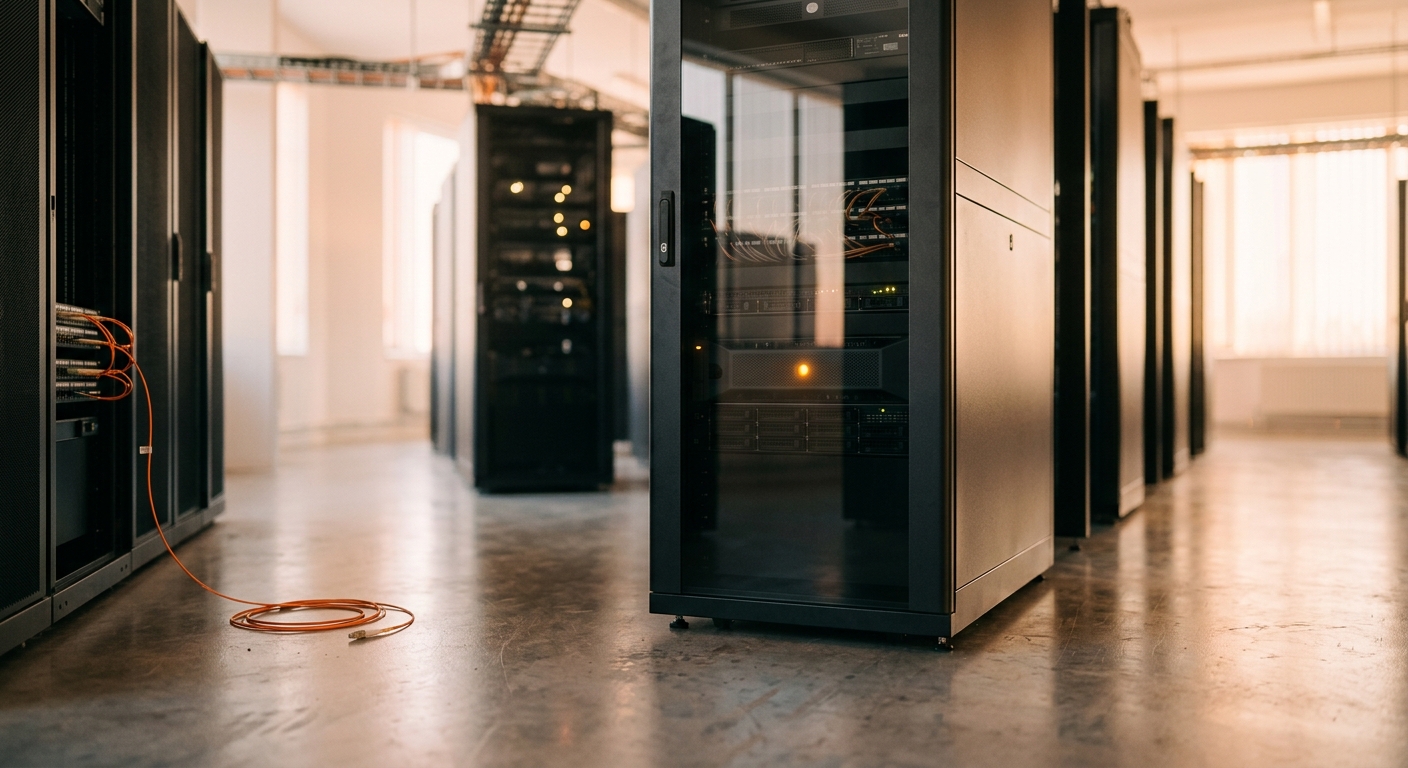
Most enterprises asking for 'air-gapped AI' need one of four distinct architectures — true air-gap, on-prem connected, VPC-isolated, or confidential computing — and choosing the wrong one either over-pays for security theater or under-delivers on the threat model that justified the project.
The category is muddled because vendors profit from the confusion. 'Air-gapped' has become a marketing wrapper that bundles offline operation, data sovereignty, regulated deployment, and isolated inference into a single bullet. They are not the same thing. They have different cost curves, different operational burdens, and they defend against different threats. This post names the four architectures, narrows down what an air gap actually defends against, and gives a CIO a framework for matching architecture to data class before signing a contract.
There are four architectures, and vendors blur them on purpose
A true air gap is a system physically isolated from other networks; data moves in or out only through controlled manual processes such as removable media or offline transfer [6]. An on-prem connected deployment runs the model and data inside the customer's data center but maintains controlled egress for telemetry, updates, or federation. A VPC-isolated deployment runs in a private cloud tenancy with network controls and managed boundaries — what Google now packages as a fully managed sovereign hardware-and-software stack for organizations needing isolation for regulatory or low-latency reasons [7]. Confidential computing is something else entirely: it protects data and models while in use, using hardware-backed enclaves across CPU, GPU, and interconnect domains [4].
These four are not points on a single spectrum from 'less secure' to 'more secure.' They answer four different questions. True air-gap answers 'what if the network itself is the threat?' On-prem connected answers 'what if the cloud provider is the threat, but the public internet is not?' VPC-isolated answers 'what if multi-tenancy is the threat?' Confidential computing answers 'what if the operator of the infrastructure is the threat?' Treating them as interchangeable — which most RFPs do — is the single biggest procurement error in this category.
The cost curves diverge sharply. Confidential computing requires specific silicon and a software stack that supports attestation; rack-scale GPU deployments designed for it are positioned for proprietary model and training-data protection at scale [4]. True air-gap is cheaper on hardware but expensive on operations, because every update becomes a logistical event. On-prem connected is the most affordable for steady-state workloads. The brochure rarely separates these, which is how a buyer ends up quoted for confidential-computing silicon when they needed a private deployment with strong audit logging.
The air gap solves a narrower problem than its marketing suggests
The air gap is a real control. It defends against remote network attackers, ransomware that propagates over reachable networks, and exfiltration paths that depend on outbound connectivity. For AI workloads handling sensitive training data, proprietary models, and confidential datasets, an air gap is a last line of defense against network-based threats [6]. That is the case for it.
It is also the entire case for it. An air gap does nothing about poisoned open-weight models that arrive on the sneakernet drive. It does nothing about prompt injection embedded in ingested PDFs, contracts, or email archives — the attack surface every RAG system has by construction. It does nothing about insider misuse, where a credentialed user prompts the system into surfacing material they should not see. And it does nothing about supply-chain compromise of the removable media used to bring models, weights, and dependencies across the gap. Most real AI incidents in regulated environments will originate in one of those four places, not in a remote attacker pivoting across the LAN.
Buying 'air-gapped AI' as if the air gap itself is the security feature is buying a moat for a building whose front door is unlocked. The defensible posture treats the air gap as one control among several — paired with provenance verification on model weights, citation tracking so generated answers trace back to source documents, role-based access on the retrieval layer, and audit export that survives the gap. Without those, the air gap protects you from threats you were unlikely to face while leaving the threats you will face untouched.
The operational tax nobody quotes you: updates, patches, and model staleness
Running an air-gapped LLM is not a deployment; it is a workflow. Model weights need to be updated as better open-weight releases arrive. Runtime dependencies accumulate CVEs that need patching. Vector database engines, embedding models, GPU drivers, and orchestration layers each have their own update cadence. Audit logs need to leave the environment for retention and compliance review. Every one of those flows has to cross the gap through controlled manual processes [6] — staging, scanning, signing, and verification on both sides.
If you do not engineer this workflow up front, two things happen. The model goes stale: the frontier of open-weight quality moves quickly, and a deployment that was state-of-the-art at signing will be visibly worse than what users see on their phones within six months. Accuracy degrades not because the model changed, but because newer models retrieve, summarize, and cite better, and user expectations move with them. Then the security posture decays. Unpatched dependencies pile up. The 'secure' system becomes the system everyone is afraid to touch.
The honest budget for an air-gapped AI deployment includes a sneakernet update path with documented procedures, a staging environment outside the gap where new artifacts are scanned and signed, an audit log export pipeline, and a person whose job is to run that loop on a schedule. None of this appears on vendor pricing pages. All of it is the difference between a system that stays useful for three years and one that quietly erodes into a liability.
Specify the workload before you specify the architecture
The honest deployment question is not 'can we run AI offline.' A quantized model runs on a laptop. The question is which model size, quantization, and GPU configuration matches your latency, concurrency, and accuracy targets — because that answer determines whether your air-gap project is a $50K appliance decision or a multi-rack capital project.
A 7B-to-13B parameter model at 4-bit quantization, serving a small team with single-digit concurrent users on a document-Q&A workload, fits on a single workstation-class GPU and behaves like an appliance. A 70B model serving a department, with sub-second first-token latency and dozens of concurrent users running RAG over millions of documents, is a different machine entirely — multiple high-memory GPUs, fast interconnect, and a storage tier sized for the vector index. Confidential-computing-grade rack systems aimed at protecting proprietary models and training data at scale sit further up the curve again [4].
Specify the workload first. Concurrency, document corpus size, acceptable latency, and required model quality drive the hardware. The hardware drives the cost. The cost determines whether air-gap is even the right answer, or whether an on-prem connected deployment with the same isolation guarantees on the data plane delivers 90% of the security at 40% of the spend.
Match the architecture to the data class, not the brochure
Classified workloads, life-safety systems, and operations in network-unavailable environments need a true air-gap. Defense and intelligence, certain healthcare systems, and critical infrastructure operate here, and air-gapped AI is a baseline requirement rather than a feature [3]. Government modernization fits here too, where self-hosted AI must run inside classified facilities and meet standards like NIST FIPS and ICD 503 without external network connections [5].
Regulated-but-connected enterprise data — most financial services, most healthcare outside classified research, most legal and pharmaceutical work — needs on-prem with controlled egress, not a true air-gap. The threat model is cloud exposure, third-party processor risk, and GDPR-aligned data residency, not remote network attackers reaching into the LAN. An on-prem connected deployment with strong identity, citation tracking back to source documents and page numbers, and exportable audit trails answers that threat model directly. Multi-tenant model protection, where the concern is that the infrastructure operator could see proprietary weights or inference data, is the case for confidential computing [4].
Most buyers asking for 'air-gapped AI' need the middle option: on-prem, isolated on the data plane, with controlled and logged egress for updates and telemetry. They want the sovereignty guarantee and the audit trail. They do not want the operational tax of a true air-gap, and once they price it honestly, they almost never choose it. Classify the data, name the actual threat actors, then pick the architecture. Not the other way around.
A defensible on-prem AI stack is one stack, not seven contracts
A credible isolated AI deployment is a single integrated stack: hardware sized to the workload, a runtime running locally on that hardware, open-weight models whose provenance can be verified, a RAG layer with citation tracking down to source document, page, and revision, identity and role-based access on the retrieval layer, and an audit export path that survives the isolation boundary. Every seam between vendors in that list is either a network hole or an operational orphan. Both erode the isolation you paid for.
When the GPU vendor, the runtime vendor, the model provider, the RAG framework, the vector database, the identity layer, and the support contract are seven separate relationships, the integration work falls on the customer — and the customer's security team becomes responsible for reasoning about a stack no single party owns. Updates desynchronize. CVEs in one component sit unpatched because another component has not certified the fix. The audit trail has gaps where logs cross vendor boundaries. This is the default outcome of multi-vendor on-prem AI projects, not a failure mode.
Pick the wrong isolation architecture and you will either pay air-gap prices for cloud-grade risk, or impose air-gap operations on a team that just needed a private deployment — and in both cases the model that was supposed to protect your business becomes the liability. Classify the data, name the threat, size the workload, and buy the stack as one thing from one vendor that supports it end to end. That is what makes the isolation hold.
Talk to our team about matching an isolation architecture to your data class — https://wavenetic.com
Sources
- Air-Gapped AI: Delivering the Transparency and Control Enterprises Demand — Replicated
- AI Security with Confidential Computing — NVIDIA
- Transforming government IT: AI for air-gapped environments — GitLab
- What Is an Air Gap and Why It Matters for AI Storage — MinIO
- Google Distributed Cloud air-gapped — Sovereign Cloud